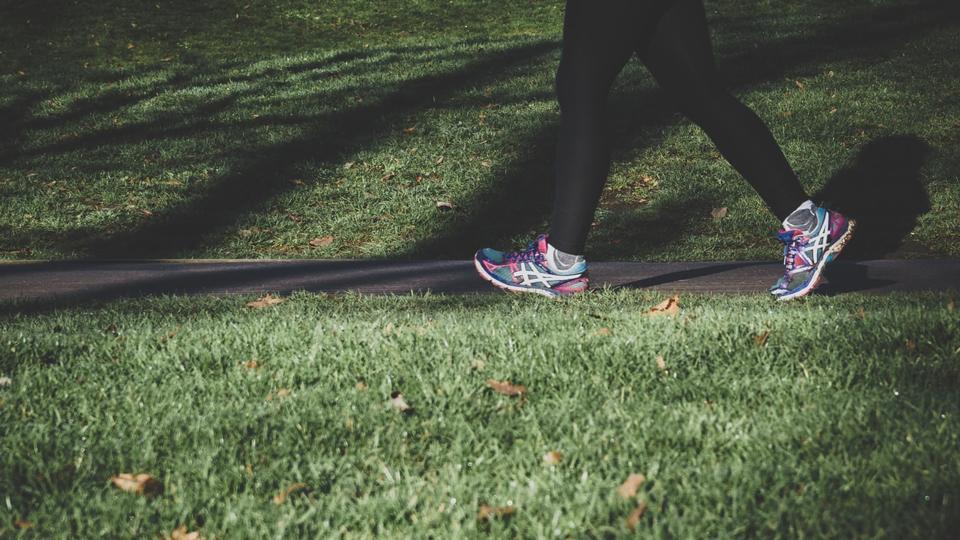
Researchers have found that walking may be a key clinical tool in helping doctors accurately identify the specific type of dementia a patient has.
Published in the Alzheimer’s & Dementia: The Journal of the Alzheimer’s Association, the research have shown that people with Alzheimer’s disease or Lewy body dementia have unique walking patterns that signal subtle differences between the two conditions.
The study also shows that people with Lewy body dementia change their walking steps more – varying step time and length – and are asymmetric when they move, in comparison to those with Alzheimer’s disease.
“The results from this study are exciting as they suggest that walking could be a useful tool to add to the diagnostic toolbox for dementia,” said study lead author Riona McArdle from the Newcastle University in the UK.
“It is a key development as a more accurate diagnosis means that we know that people are getting the right treatment, care and management for the dementia they have,” she added.
For the study, researchers analysed the walk of 110 people, including 29 older adults whose cognition was intact, 36 with Alzheimer’s disease and 45 with Lewy body dementia.
Participants moved along a walkway – a mat with thousands of sensors inside – which captured their footsteps as they walked across it at their normal speed and this revealed their walking patterns.
People with Lewy body dementia had a unique walking pattern in that they changed how long it took to take a step or the length of their steps more frequently than someone with Alzheimer’s disease, whose walking patterns rarely changed.
When a person has Lewy body dementia, their steps are more irregular and this is associated with increased falls risk.
Their walking is more asymmetric in step time and stride length, meaning their left and right footsteps look different to each other.
The study found that analysing both step length variability and step time asymmetry could accurately identify 60 per cent of all dementia subtypes – which has never been shown before.



























 WhatsApp us