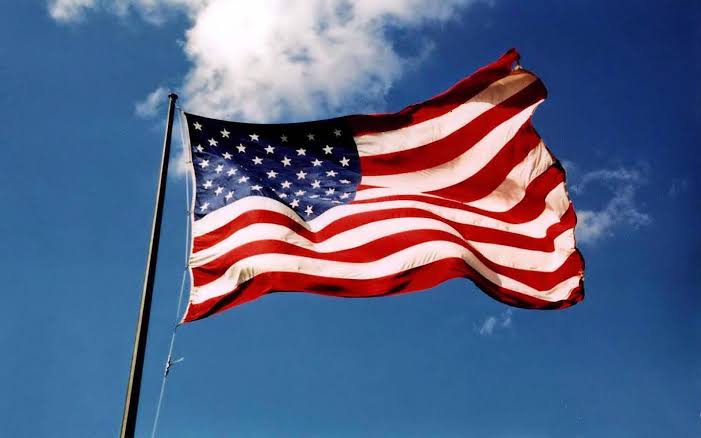
The phrase “deep state” has increasingly entered American political debates, often linked with allegations that secret networks of intelligence agencies, military leaders, and entrenched bureaucrats manipulate U.S. policy and even influence leadership changes abroad. But how powerful is this so-called deep state, and what evidence exists behind the claims?
Origins of the Concept
The term “deep state” originated in Turkey, describing a hidden alliance of military officers, intelligence officials, and criminal networks operating outside democratic control. In the United States, the idea gained attention through author Peter Dale Scott’s research and later Mike Lofgren’s analysis. Lofgren, a former congressional aide, described it as a hybrid of government agencies and private industry elites that can operate beyond elected authority.
Deep State in the U.S. Context
In American politics, the “deep state” label is often used for intelligence agencies like the CIA, NSA, and FBI, as well as the Pentagon and long-standing bureaucracies. Critics argue these institutions sometimes act independently of elected leaders. For example, the CIA’s role in foreign regime change operations during the Cold War is well documented. The U.S. helped overthrow Iran’s government in 1953, Guatemala in 1954, and Chile in 1973. These examples fuel suspicions that similar forces may also influence domestic politics.
Trump Era and Renewed Debate
The idea of a U.S. deep state became mainstream during Donald Trump’s presidency from 2017 to 2021. Trump often accused intelligence agencies and federal employees of undermining him through leaks, investigations, and resistance to his policies. Conservative media outlets supported this view, portraying the bureaucracy as an unelected government acting against the will of voters.
However, most experts reject the idea of a unified conspiracy. Legal scholars such as Jon D. Michaels argue that U.S. agencies are fragmented, transparent, and subject to oversight. Harvard professor Stephen Walt notes that while there is an elite shaping foreign policy, it is visible and public, not hidden or secret.
Public Perception
Polls show Americans are sharply divided. A 2017 Economist/YouGov poll found that 83 percent of Republicans familiar with the term believed the deep state was trying to undermine Trump, while only 10 percent of Democrats agreed. Many independents and Democrats see the term as a political narrative rather than a factual reality.
Global Accusations of Regime Change
Outside the U.S., Washington’s record reinforces claims of deep-state style intervention. From orchestrating coups in the Cold War to influencing governments in Latin America and the Middle East, U.S. intelligence has undeniably shaped foreign outcomes. Critics argue that this history strengthens the perception of a hidden hand not just abroad but also at home.
The U.S. deep state is less a proven institution and more a political metaphor. While history confirms that intelligence agencies have engineered regime changes overseas, evidence of a secret domestic government overthrowing elected leaders is weak. Still, the perception of a powerful deep state remains influential, reflecting mistrust between Americans and their governing institutions.






















 WhatsApp us