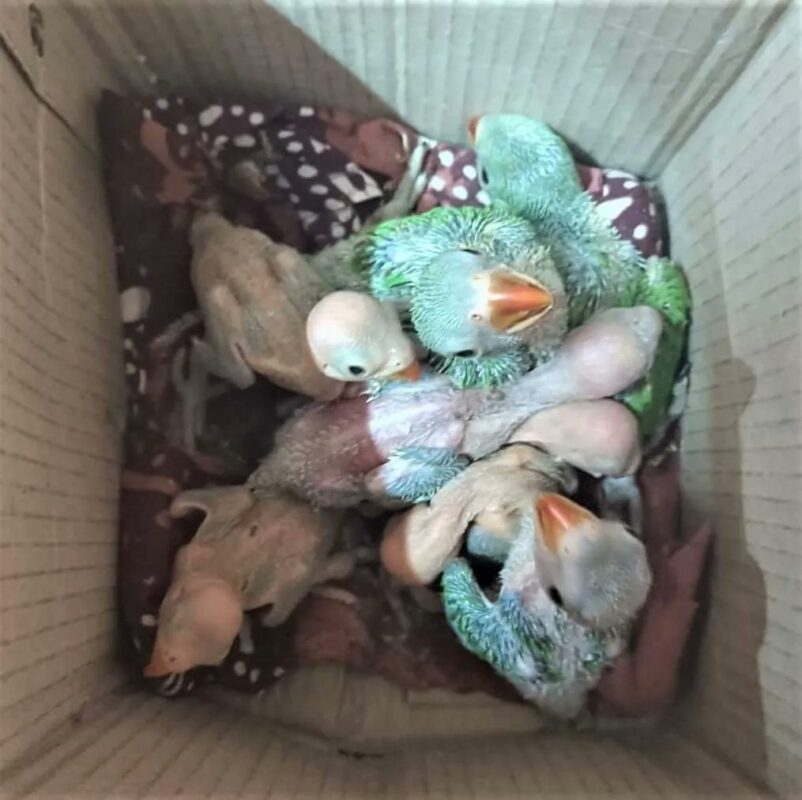
Wildlife trafficking is a major hurdle in the path of the animals’ thriving population. However, the Government of India has been taking several stringent steps to keep the illegal trade in check.
Globally, the international wildlife trade is worth up to $23 billion annually. In the recently concluded 74th Standing Committee Meeting of CITES, held from March 7 to 11 in Lyon, France, India stated its stance at curbing the illegal trade of animals. In addition to keeping a check at home, the Government is also active in tracking cross-border animal crimes and trafficking.
Role of Wildlife Crime Control Bureau
Wildlife Crime Control Bureau, a statutory multi-disciplinary body under the Union Environment Ministry, was established to combat organized wildlife crime in the country.
The Bureau under Section 38 (Z) of the Wild Life (Protection) Act, 1972, is mandated to collect and collate intelligence related to organized wildlife crime activities. It also disseminates the same to States and other enforcement agencies for immediate actions to apprehend the criminals.
The Bureau also created a centralized wildlife crime data bank. It coordinates actions and assists foreign authorities and international organizations to control wildlife crimes. The other major activities undertaken by the Bureau include capacity building and awareness programs to strengthen the enforcement agencies.
Anti-poaching squads
The declining number of poaching activities of one-horned rhinos in Assam can be credited to the efforts of anti-poaching squads. The squad works to curb the illegal trade and trafficking of wildlife and wildlife products. For instance, elephants are hunted and trafficked for their ivory, rhinos for their horns, pangolins for meat, use in traditional medicine, and as fashion accessories.
The anti-poaching squads also train law enforcement officers to fight the illegal trade and forestry personnel to guard against poaching. Forest watchers assist the forest department, the police department, and law enforcement agencies to track down traffickers and smugglers, recover animal skins, body parts, ivory, and sometimes, live animals from poachers, and provide legal assistance where required.
Operation Soft Gold
The Indian Government has been running several projects that provide special care to that particular animal, e.g, Project Dolphin. Similarly, it is also running projects for curbing illegal trade practices related to animals. Operation Soft Gold is one such project.
‘Operation Soft Gold’ aims at curbing the illegal trade of Tibetan antelope (Shahtoosh). The Wildlife Crime Control Bureau envisaged and conducted Operation Soft Gold from October 1, 2018, to March 31, 2019. The measures taken by India were also acknowledged by Switzerland at CITES meeting.
Enforcement regime
In the 74th meeting of the CITES Standing Committee, India also emphasized that the seizures of wildlife articles in India indicate a strong enforcement regime, against demand-driven poaching and illegal trade from beyond our borders.
The Wildlife (Protection) Act, 1972, prohibits the illegal capturing, killing, buying, and selling of animals and animal parts. Under Section 51, any person committing a breach of any of the conditions listed down in the Act shall be punished with imprisonment which may extend up to 3 years, or with a fine which may extend to 25,000 rupees, or with both.
TRAFFIC India
TRAFFIC India is a wildlife trade monitoring network, a division of the conservation group World Wide Fund for Nature (WWF India). TRAFFIC came to India in 1991. It has been working closely with the National and State Governments and various agencies to help study, monitor, and influence action to curb illegal wildlife trade.























 WhatsApp us